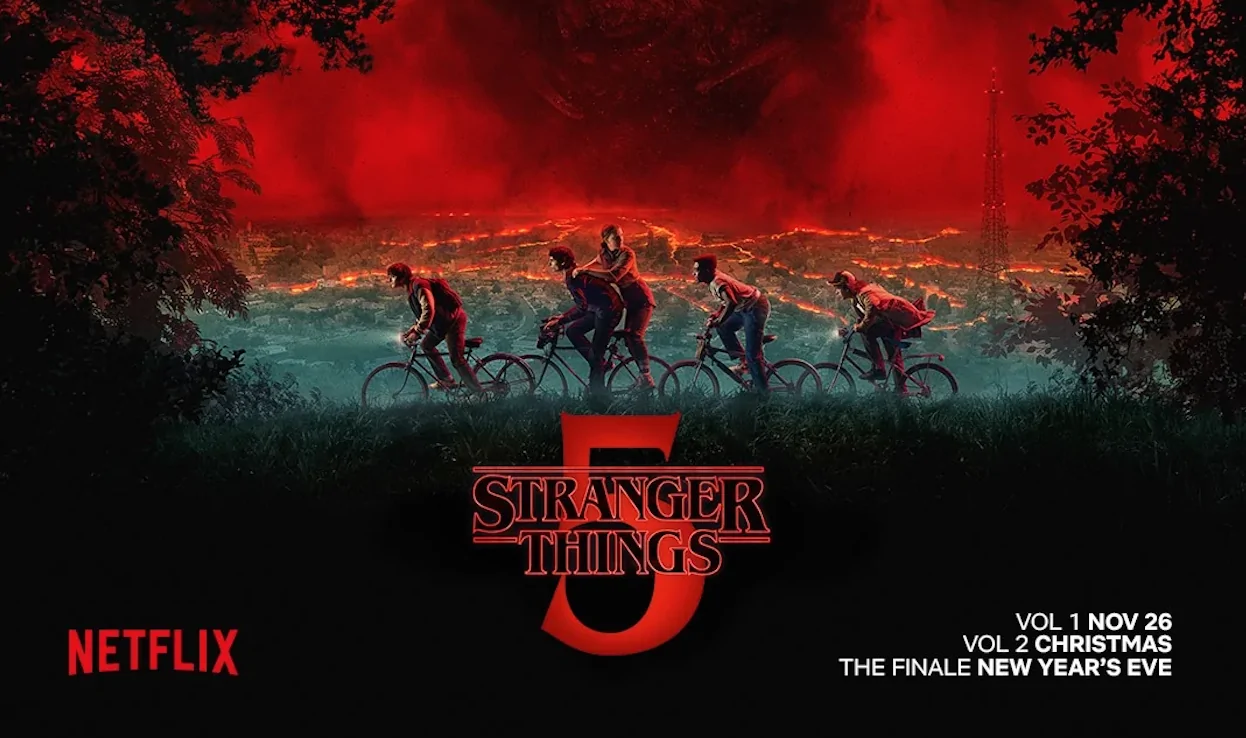
The Stranger Things Conformity Gate phenomenon is more than a viral fan theory; it is a case study in contemporary audience engagement. While short-form content dominates digital platforms, this incident challenges the assumption that Gen Z audiences lack attention span or depth. Instead, it suggests that the Gen Z gaze is analytical, participatory, and highly literate in media language.
Media scholar Stuart Hall famously argued that audiences actively decode media texts rather than passively absorb them. Conformity Gate feels like a contemporary example of that theory in action — a generation negotiating, questioning, and even resisting the narrative presented to them.
This article explores what the so-called ‘secret ninth episode’ theory reveals about the future of audience expectations and media production
The Case Study: Is This A Subversion of My Expectations?
On the 31st December 2025, Netflix released what was presented as the final episode of Stranger Things. While many viewers accepted the peaceful epilogue, a significant portion of the fandom began questioning inconsistencies within the episode. Fans noted postural irregularities, shifting props, unusual framing, and what they interpreted as intentional visual glitches.
This speculation evolved into what became known as ‘Conformity Gate’: the belief that a secret ninth episode would be released on 7th January 2026 to resolve narrative dissatisfaction.
The theory gained traction when Netflix’s regional accounts posted cryptic promotional material — images of doors and captions such as “you will question everything” — which were later revealed to be teasers for 2026 content programming.
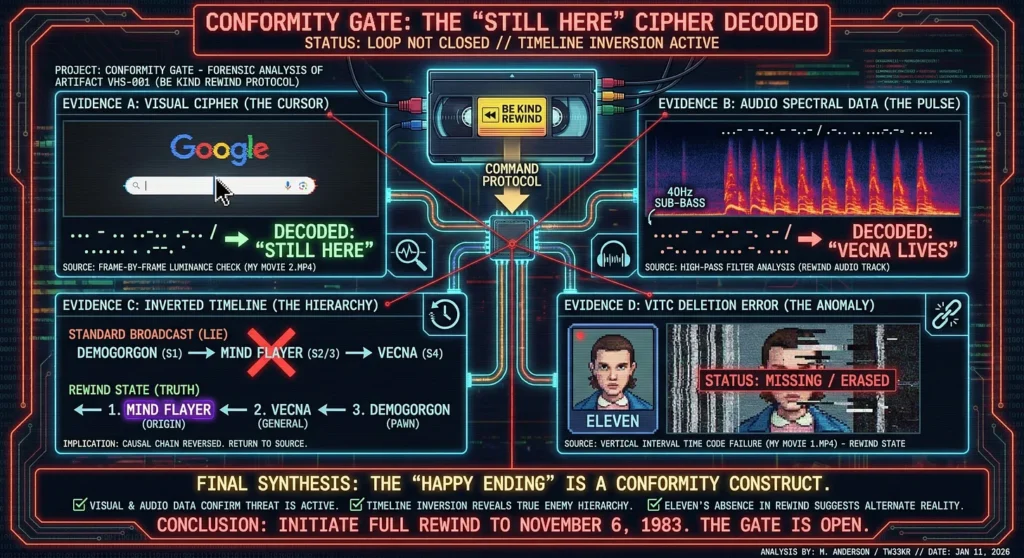
Even after the Duffer Brothers announced a behind-the-scenes documentary titled One Last Adventure, scheduled for 12th January 2026, segments of the audience maintained that the finale itself was a deliberate illusion engineered within the show’s own logic; being flayed by the mind flayer.
Rather than dismissing this persistence as delusion, it is more productive to ask: what does this reveal about audience psychology?
Umberto Eco once described works of art as ‘open works’ — narratives that invite audiences to complete them through interpretation. Whether intentional or not, the Stranger Things finale became exactly that: an open work activated by its viewers.
Lesson 1: Deep-Diving is the New Scrolling
There is a widespread cultural claim that TikTok or other forms of short-form content have eroded young people’s attention spans. Conformity Gate complicates this narrative.
Gen Z does not passively scroll; they actively deconstruct.
Short-form platforms function as interpretative hubs where viewers produce commentary, cross-reference scenes, and circulate micro-analyses. The fan edit has become a form of intellectual labour. Rather than simply consuming, audiences now fact-check, theorise and interrogate narrative coherence in real time.
Henry Jenkins has long described this shift as a participatory culture, in which audiences move from consumers to producers or fans of meaning. The Conformity Gate breakdowns, stitched analyses and collaborative theorising reflect exactly this dynamic.
The willingness to dissect a 40-minute episode for weeks demonstrates not diminished attention, but redirected attention.
Lesson 2: The Death of ‘Second-Screen’ Writing
Streaming platforms increasingly design content for distracted viewing — what might be called ‘second-screen’ writing. Shows are structured to be understood even if viewers are multitasking. This often involves dialogue-heavy exposition, simplified plotting and explicit emotional cues.
However, Conformity Gate may represent resistance to this approach.
Many fans interpreted the finale’s tidy resolution and overt exposition as suspiciously conventional. Instead of accepting simplicity, they assumed complexity was hidden beneath it.
Television scholar Jason Mittell’s work on narrative complexity suggests that contemporary audiences are not overwhelmed by intricate storytelling — they are energised by it. When viewers encounter what feels like narrative oversimplification, suspicion can follow.
This signals a key tension: when writing is calibrated for distracted consumption, it risks alienating the segment of the audience that values subtlety and narrative risk.
The more media anticipate distraction, the more some viewers demand intellectual stimulation.
Lesson 3: Authenticity Over Conformity
At the core of the theory was the idea that the characters’ perfect’ lives felt like an illusion — too neat, too resolved, too aesthetically controlled.
This reflects a broader Gen Z tendency: scepticism toward polished narratives and surface-level coherence.
Raised within algorithmic and highly mediated environments, this generation is fluent in detecting artifice. Cultural critic Neil Postman once warned that television would reduce public discourse to passive entertainment. Yet moments like Conformity Gate complicate that anxiety. What we see here is not passivity, but hyper-analysis. Like with what Postman postulated, they didn’t find the ending amusing but were willing to do the ‘hard work’ as to why that was the case.
Audiences want media that makes them think, pay attention and question what they are being shown. When creators fail to meet that intellectual expectation, viewers do not always disengage — they construct alternative interpretations.
In digital culture, interpretative sharpness becomes a form of social currency. The ability to identify hidden meaning signals cultural fluency.
The Final Summary
The Conformity Gate theorists were not simply disappointed; they were intellectually under-stimulated.
The lesson for creators and brands in 2026 is clear: stop underestimating your audience.
Gen Z is not merely watching content — they are interrogating it. If complexity is absent, they will search for it. If meaning is thin, they will deepen it. If the narrative feels too seamless, they will look for the seams.
For educators, creators and institutions alike, the challenge is not to simplify the message, but to rise to the level of engagement already present.
Critical thinking is not disappearing. It is evolving — and it is already here.
And judging by Conformity Gate, the search for meaning doesn’t end when the credits roll.